How Can We Make Maine Farmland Ready for the Next Generation of Operators
Across Maine, communities spend considerable time and money helping vacant storefronts, mills, and commercial sites return to productive use. Economic-development organizations do more than advertise a property. They help clarify ownership, assess infrastructure, address practical barriers, assemble financing, and negotiate arrangements that allow a business to operate.
What if we applied the same urgency and intention to revitalizing Maine's agricultural lands?
Fortunately, Maine is not starting from scratch. Maine FarmLink and Maine Farmland Trust connect farmers with landowners and support farmland access and protection. Land For Good brings deep expertise in leases, tenure, succession, and farm transfer. State and federal agencies, lenders, conservation districts, Extension, attorneys, municipalities, and other service providers hold additional pieces. Yet the practical challenge often begins after a potential match is identified. The landowner and farmer still need to create an arrangement that is secure, workable, and realistic about infrastructure, investment, stewardship, and time.
The problem is not simply finding land.
It is reactivating a farm enterprise.
Leasing belongs at the center of the conversation
Nationally, farmland leasing is not a marginal or temporary feature of agriculture. USDA reports that 39 percent of the 880 million acres of U.S. farmland was rented or leased in 2022. More than half of U.S. cropland is rented. New USDA data also show that 348 million acres were rented out in 2024, with 79 percent of those acres owned by non-farming landlords.
Maine also has a disproportionately high amount of underutilized farmland. In the 2022 Census of Agriculture, Maine farms reported 61,481 acres in a category that includes cropland left idle or planted in cover crops for soil improvement but not harvested, pastured, or grazed. That represented 13.8 percent of reported cropland, compared with 11.2 percent in New Hampshire, 9.6 percent in Massachusetts, and 7.4 percent in Vermont. Some of those acres may have reactivation potential; others are serving intentional conservation, soil-building, or personal purposes. The Census also misses land that has already left an active farm operation.
Those figures matter because farmland-access conversations can drift toward ownership as the ideal outcome and leasing as a secondary compromise. Ownership can provide security and build equity, but purchasing a farm is beyond the reach of many beginning and expanding farmers—especially amid development pressure, high land prices, and high borrowing costs. Leasing can lower the initial cost of entry, allow a business to grow before taking on real-estate debt, and give a landowner a gradual path through retirement or succession.
The question, then, is not only whether Maine has viable land that could support more agricultural activity. It is whether willing landowners and farmers can create leases strong enough to support a real business.
Why a listing or introduction may not be enough
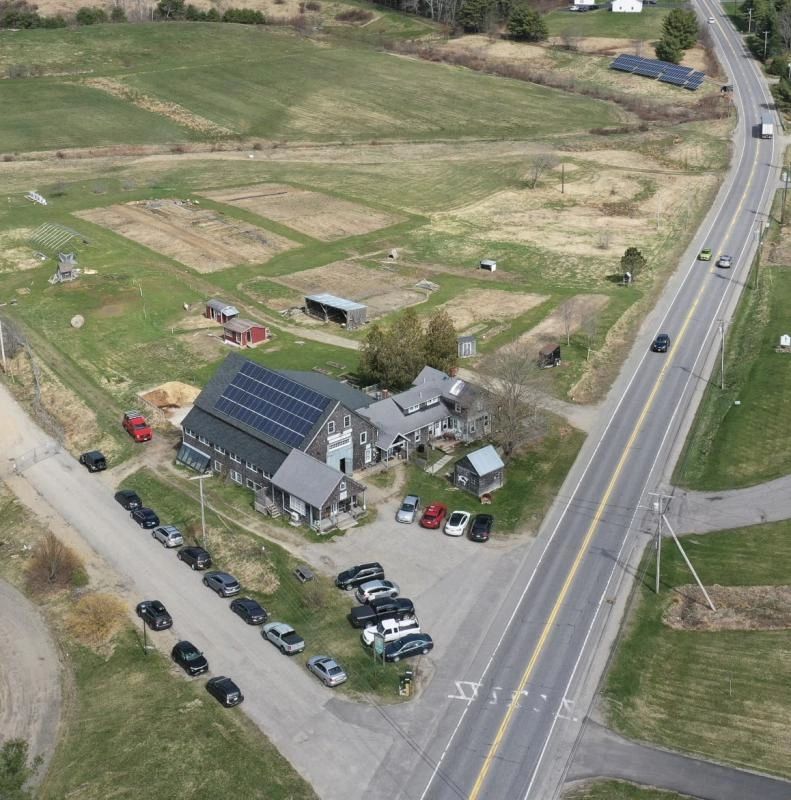
Imagine a landowner with 40 acres of good soil, an older barn, a well, and fields that have not been commercially farmed for several years. The owner wants to see the land remain agricultural but is not ready to sell. A beginning farmer is interested in a mix of vegetables and pastured livestock.
On paper, it looks like a match.
Then the questions begin. The fencing needs work. The barn roof may last five years—or only two. The well’s capacity is unknown. There is no housing on the property. The farmer would need wash-and-pack space, electrical improvements, and several years of soil building. The landowner is comfortable with a 5-year lease; the farmer cannot justify investing tens of thousands of dollars without a longer commitment. Neither party is sure who should pay for improvements, who would own them at the end of the lease, or what happens if family circumstances change.
The problem is not a lack of goodwill. It is not a bad match. It is that the property and agreement are not yet lease-ready.
What would “lease-ready” mean?
A lease-ready property would not need to be perfect, fully equipped, or free of risk. It would need enough clarity for both parties to make informed commitments.
First, the parties need a shared understanding of the property. That may include soils, water, access, buildings, fencing, utilities, conservation restrictions, housing, and known maintenance needs. The purpose is not to produce an expensive engineering study for every farm. It is to identify the conditions that materially affect what can be produced and what investments will be required.
Second, the lease must match the business and the investments being contemplated. A one-year agreement may work for haying or limited seasonal use. It is unlikely to support an orchard, a livestock enterprise requiring fencing and water systems, or a vegetable operation that needs soil improvements, greenhouses, and wash-and-pack infrastructure. Longer-term leases, renewal options, phased agreements, or pathways toward purchase may provide security without requiring the landowner to make an immediate permanent decision.
Third, responsibility for improvements needs to be explicit. Who repairs the barn roof? Who pays for fencing, drainage, electrical service, or a high tunnel? Can the farmer remove an improvement? Does the landowner reimburse any remaining value if the lease ends early? What maintenance standards apply? These questions can feel uncomfortable at the beginning, but ambiguity is more damaging after money has been spent.
Finally, both parties may need support beyond a lease template. A landowner may have concerns about liability, taxes, conservation goals, family expectations, or loss of control. A farmer may need financing, markets, business planning, housing, and assurance that the tenure arrangement is strong enough for a lender or grant program. A durable lease sits inside a larger farm business and a larger family decision.
A coordination gap—not an organizational failure
The gap is not evidence that any of these organizations is failing. No single organization is designed to assess every property, prepare every landowner, structure every lease, coordinate every improvement, and help every farmer assemble a viable business.
The opportunity is to make the handoffs and shared work more deliberate. When a promising match emerges, who helps the parties identify the unresolved questions? Who connects them with the right legal, financial, conservation, infrastructure, and business expertise? Who makes sure that advice from several sources adds up to one workable arrangement?
The answer may not require a new organization or elaborate statewide program. It could begin with a clearer lease-readiness process: an initial property and goals assessment, technical assistance for both parties, model questions and agreements, realistic timelines, and a named point of coordination among existing partners. Limited resources for targeted improvements could help where a modest investment makes an otherwise viable lease possible. Massachusetts, for example, offers grants for practical work such as reclaiming inactive fields, improving drainage, and rebuilding soil on protected farmland.
That is less a finished program design than an important design question for Maine agriculture: how can existing land-access, conservation, succession, financing, and technical-assistance systems work together so that more willing landowners and capable farmers can reach durable agreements?
Maine does not simply need to identify farmland or introduce farmers to landowners. It needs to help willing landowners and farmers create secure, workable leasing arrangements that account for infrastructure, investment, stewardship, markets, and the time required to build a viable farm business.
A listing can open the conversation. A thoughtful lease-readiness process can help turn that conversation into a farm.